
Archaeologists have recreated a deadly lift used for transporting animals into the Colosseum. It’s a little known fact that animals were also released into the arena and some species came close to extinction as a result. The Colosseum Underground Tour is a fascinating experience.

The Colosseum Underground Tour
It is thought that up to one million animals may have been killed, including bears, lions, but also elephants, giraffes and hippopotami. A replica of the Colosseum’s ancient lift has been created for a TV documentary for the US channel Public Broadcasting System.
You can see the platform where the poor animals would have been brought out. With our tour, we had fast track entry and restricted access to the arena floor where the gladiators and animals would have fought for their lives, as well as the underground area.
Before being hoisted up on the deadly elevator, the animals and slaves were held underground in the “hypogeum” or basement. It must have been a terrifying place, with the most horrific smells and sounds. These tunnels were added by the younger brother of Titus, Domitian, who was a particularly cruel emperor.
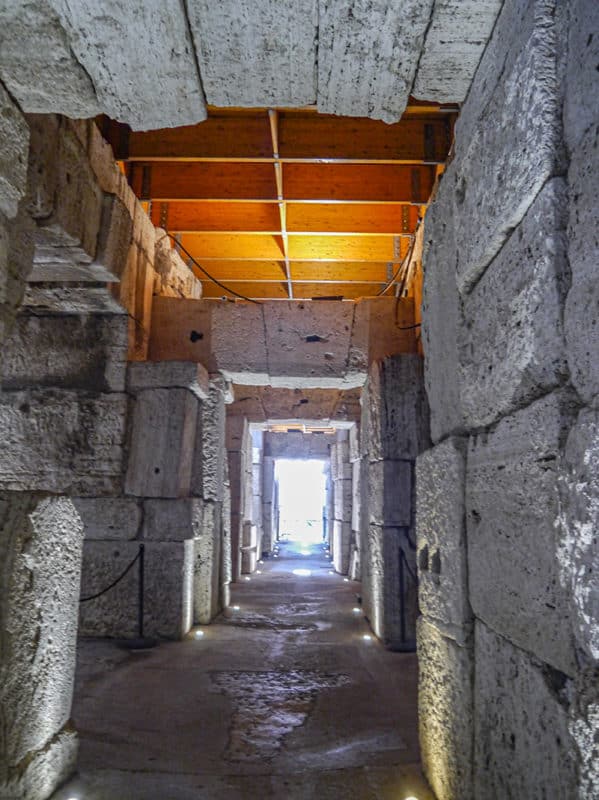
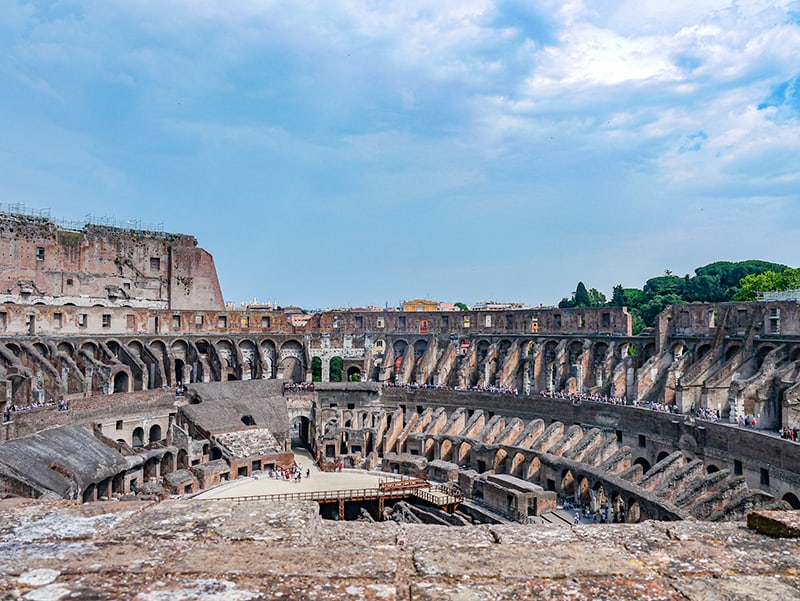
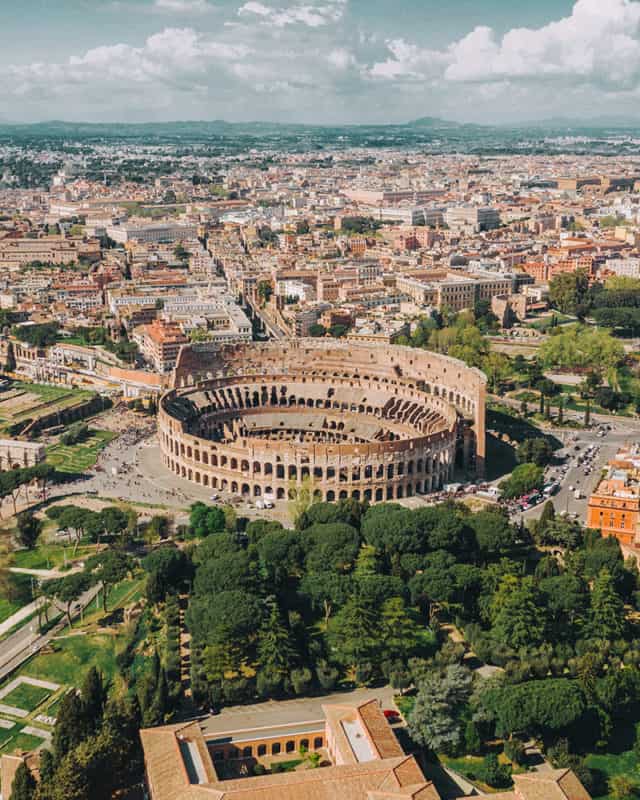
The Colosseum is a feat of engineering, the only ampitheatre that was free-standing. All the others were supported by hills.
Commissioned by the emperor Vespasian, it was built in the first century AD on the site of Nero’s palace and was capable of seating 50,000 spectators. Only 35 to 45 percent of the Colosseum was accessible to the public, but the opening to restricted groups of the hypogeum and the upper tier has doubled that.

It certainly gave us a unique insight into the hardships that the animals, slaves and gladiators must have endured. The reconstructed arena floor is also only open to restricted groups.
There were only 6 others in our tour, so it was a rare opportunity to experience the sheer size of the place in silence. You are given audio guides so are able to walk freely around whilst still hearing the tour guide.
From here you head to another restricted area, the upper levels, which had been closed since the 1970s until very recently. This seating area was where slaves, women and others considered to be lower members of society were forced to sit.
However today this third level offers some of the best views of the arena, the nearby Forum and the Arch of Constantine, with very few other visitors.
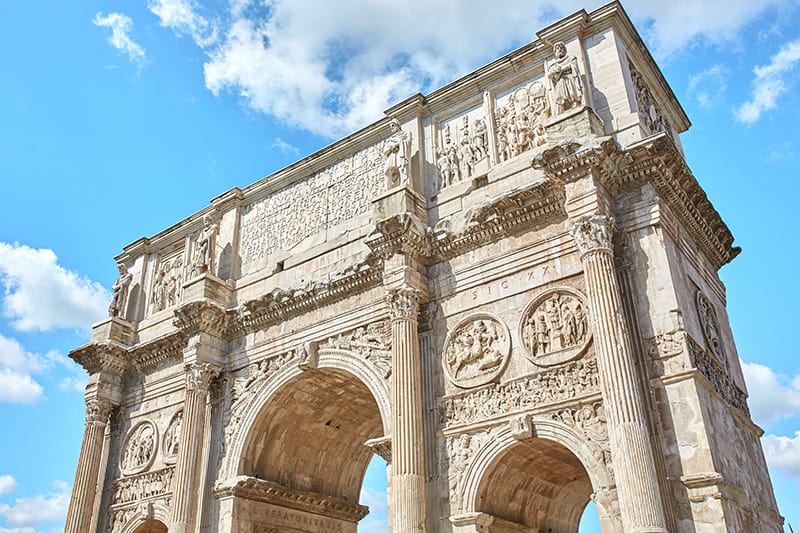
The Arch of Constantine
There are several impressive triumphal arches in Rome, yet this is the largest at 21 metres high. It celebrates the victory of the Roman Emperor Constantine over Maxentius, as well as the legalization of Christianity.
Palatine Hill
Leaving the Colosseum, walk up Palatine Hill, a verdant place which was extremly exclusive in ancient Rome as it was home to the Roman emperors. You can admire the ruins of the Domus Augustana on Palatine Hill, a palace built by the Emperor Domitian.
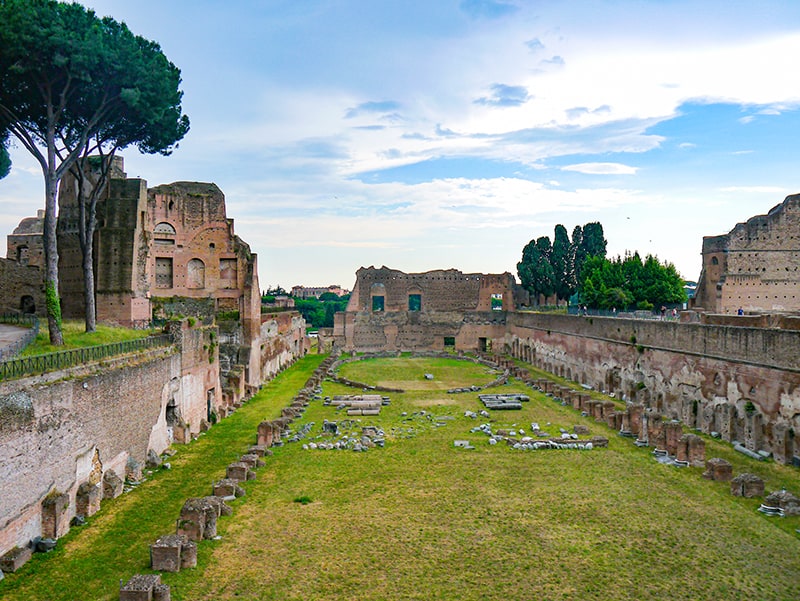
The Palatine Hill stadium also formed part of this palace. It’s not known what it was used for, though some say experts it was a place for the emperors to exercise their horses or where athletes took part in foot races and some believe it was a private garden. At any rate it is too small to accommodate chariots.
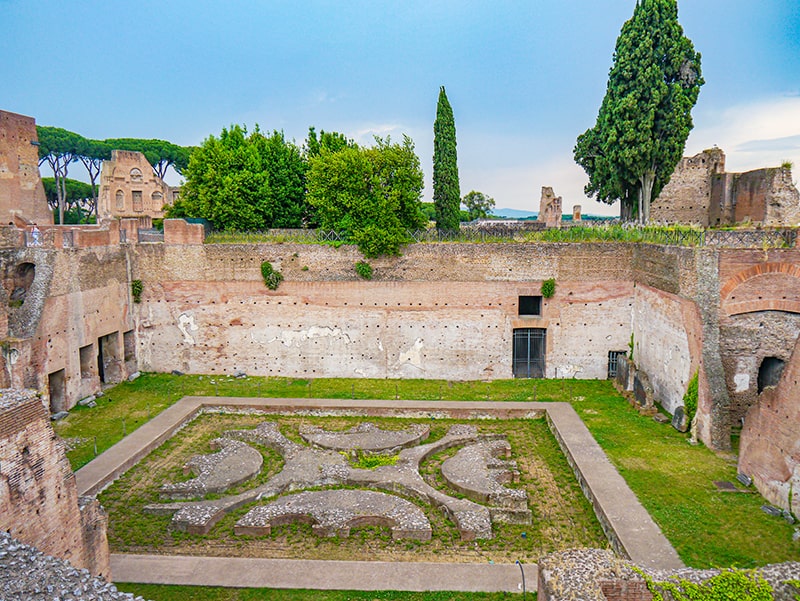
This fountain at Domitian’s Palace has an ornate decoration, and you can imagine how grand the whole place must have been.
The Forum
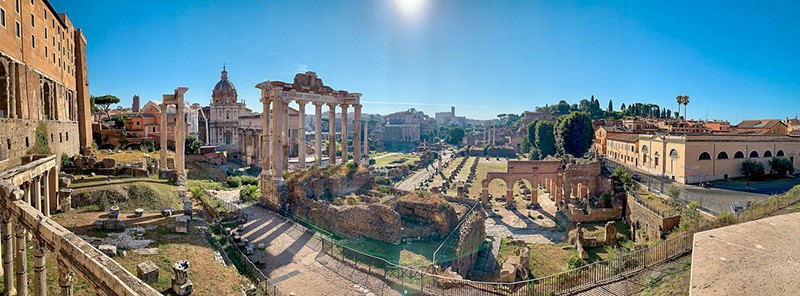
On our way back down from Palatine Hill, we had a magnificent view of the world famous Forum area. The white building topped with horses and chariots is the much more recent than the Roman ruins in the forefront. The Altare della Patria also known as the Monumento Vittorio Emanuele II, was opened in 1925.
The Arch of Titus
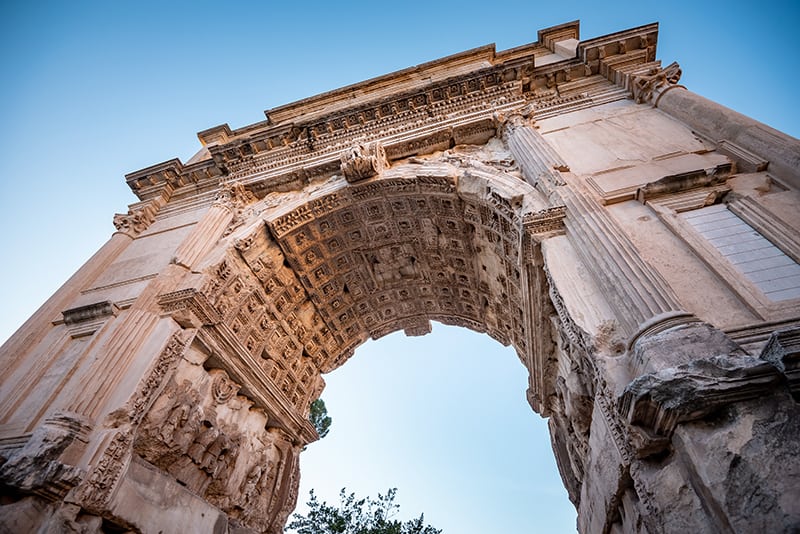
This impressive structure was constructed in around 82 AD by Emperor Domitian to commemorate his recently deceased older brother Titus and his battle victories. If it looks familiar, that’s because it was the inspiration for Paris’s Arc de Triomphe.
Temple of Castor and Pollux
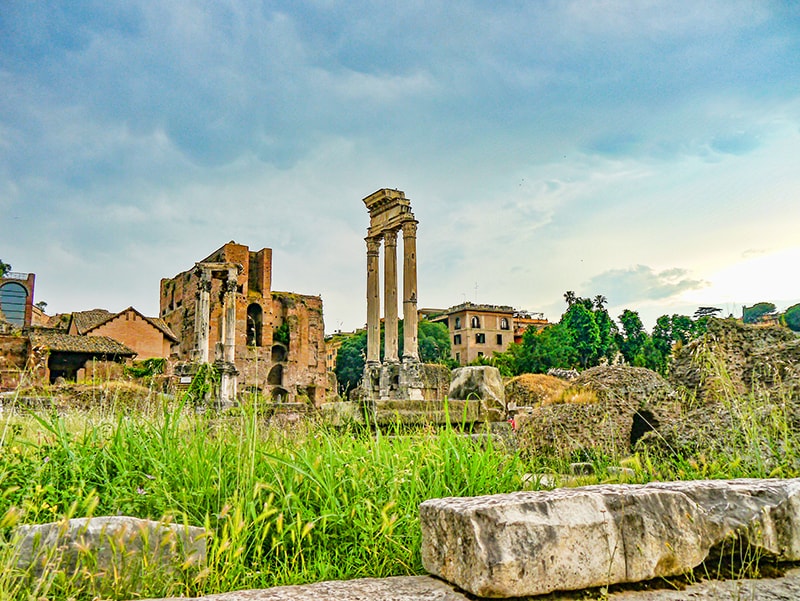
Three lonely columns are the only remaining ruins of the Temple of Castor and Pollux, previously a meeting place for the Roman Senate and then a public speaking platform.
Temple of Antonius and Faustina
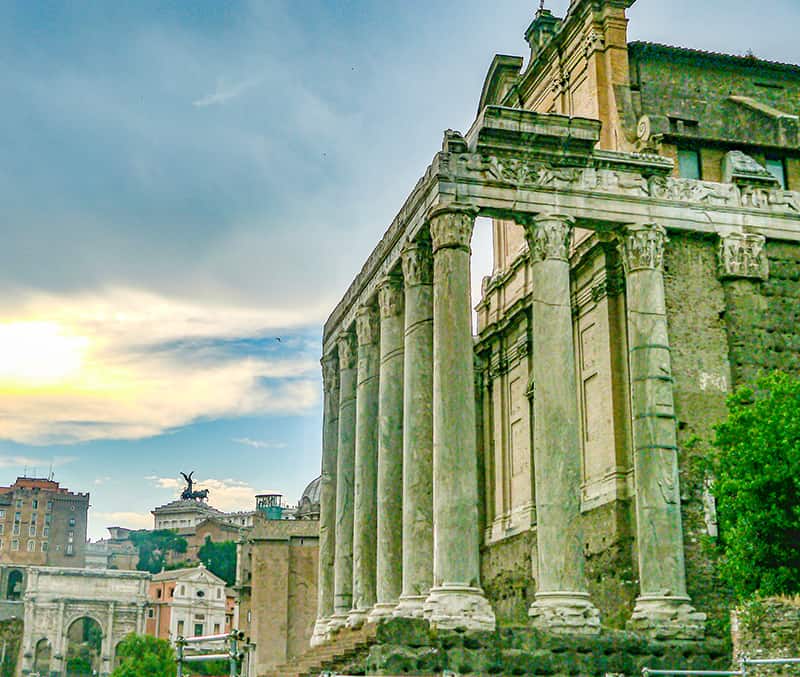
This was commissioned by the Emperor Antoninus Pius to honor his deceased and deified wife Faustina.
Temple of Romulus
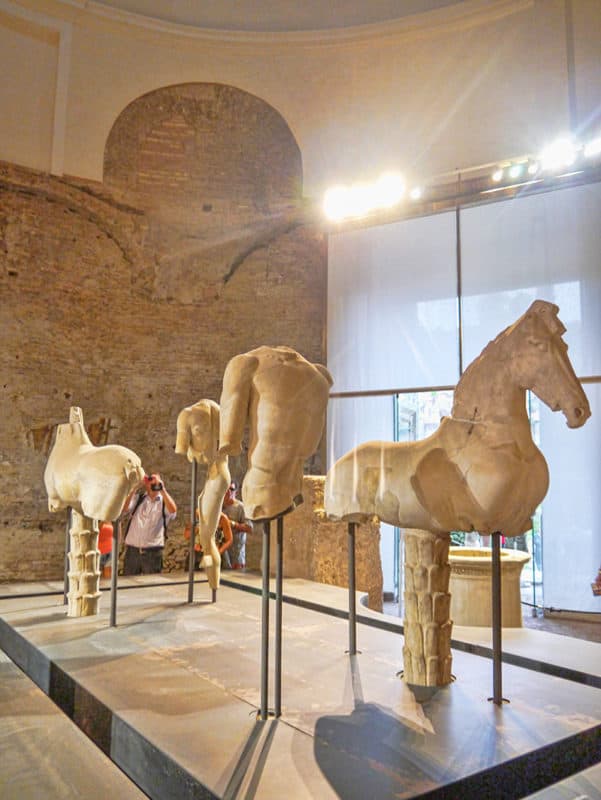
There are some impressive statues to see inside the Temple of Romulus, built by the Emperor Maxentius in memory of his young son who had also died and who was nothing to do with the founder of Rome, also known as Romulus. It still has it’s central rotunda, original columns and bronze doors.
The Colosseum Underground Tour Tickets
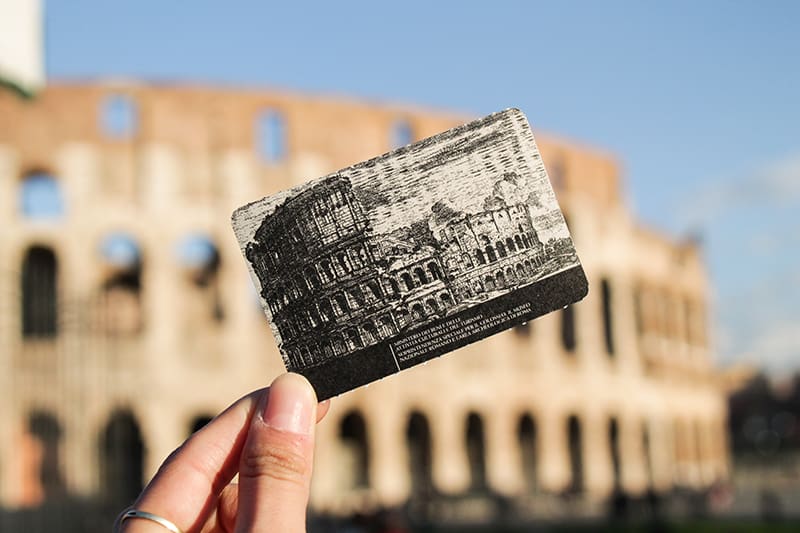
You can either buy a general entrance ticket to The Colosseum or take a special tour of the Colosseum Underground.
There are a few options for Colosseum Underground Tours:
- Small Group Ancient Rome and Colosseum Underground Tour
- Semi-Private Colosseum Underground and Ancient Rome Tour – with a maximum of 6 participants.
This really is a once in a lifetime occasion to experience the Colosseum Underground Tour and to explore the rest of the Forum and surrounding area. We also recommend taking a tour of The Sistine Chapel, St Peter’s and The Vatican, and discovering some of Rome’s other hidden gems on foot.
These outstanding monuments have withstood the test of time and born witness to so much history. Let’s just hope that construction work on Rome’s new subway line doesn’t do any lasting damage to these unique artifacts.
Looking for more travel hacks and tips? From hidden gems to unique experiences, we’ve got you covered.
Join us on Facebook, Instagram, Pinterest and Twitter.
You might also enjoy:
Looking for more travel hacks and tips? From hidden gems to unique experiences, we’ve got you covered.
Join us on Facebook, Instagram, Pinterest and Twitter.

Pingback: Vatican Tour
I know, must have been a colossal task to construct it
They were more advanced than us in some ways!
Great shots! Took me right back to Rome, we took the same tour 😉
▲ Naomi in Wonderland ▲
It was great wasn’t it! We were so lucky to be on the first day of the new lift feature
Wow! I’ve heard great things about The Roman Guy and I’d love to take one of his tours next time I’m in Rome. Thanks for sharing!
Happy travels 🙂
Yes we didn’t meet a Roman Guy but we did meet several of their female tour guides 😉
That’s very kind Angela, you too
Northern Italy has its charms as well, I must write up a blog post about travelling there. Hope you get to visit Rome soon
Wow, this tour looks amazing…such interesting historical places!
Yes the tour took us to some really fascinating places and our guide really made the history come to life
I’ve been in Rome a few years ago, but can’t remember seeing the animal lift at the Colosseum. Very sad to realize that so many animals died together with those slaves.
I know, it’s tragic for the animals and the slaves. The animal lift had just opened the day we visited and it’s part of the restricted access tour, they recreated it for a documentary
I hope you’ve had the chance to visit too Alejandra
I’m very glad it helped you relive your visit Chaicy!
Fingers crossed that you get to visit Rome soon Zarrah
Have an amazing time Gabrielle and I’ll look forward to reading your posts about it when you get back!
It’s such a majestic place, shame to think that so many people and animals were killed there when they could have used it for so many better things
I have always been fascinated of the Colosseum – how it was built during that time and the magnificent architecture itself. But it somehow scares me too to know what it was used for during those days.
Sounds like a really great and unique tour. Lucky you! 🙂
It was a surprise to find out about the animals, poor things. We were very lucky to have such a great tour
It’s interesting for me to see London in other peoples’ eyes too. I really like your photos so it was natural to pin one!
Yes I felt sad for the people and the animals. Quite incredible what the Romans managed to build
Appreciated your use of the plural for hippopotamus! I loved my trip to the coliseum so I would have really loved this! So cool you know so much about it too – really interesting 🙂
I had to check it was hippopotami! There’s so much more that I’d love to find out about the Colosseum
I never went inside the colosseum, I wish I had. I suppose it’s an excuse to return to Rome! Also, who would want to fight a giraffe?! (Or rather, watch it). Unless they got them to fight other giraffes because that’s quite interesting, but still weird…
I know, those poor giraffes! Apparently the emperor used to pit female gladiators against dwarves too – I’m not making this up. You can see where the inspiration for Game of Thrones came from
Yes it was a fantastic treat, hope you’re well Melissa!
It’s a sad thought isn’t it, if only they had used it for good rather than for killing
The architecture is breathtaking, I especially love your picture with the seagull squawking. This post made me reminisce about our own visit. I am glad that you had such a wonderful time and the behind the scenes looks equally as wonderful Lucy x
That seagull did a fair bit of sqwaking, think he got lost on the way to the sea 😉
I was last in Rome in 2008 and was SO happy I jumped on one of the Colosseum tours–otherwise I would have been totally lost in all that history!
It’s a brilliant time saver isn’t it, plus they do all the research for you!
It’s horrible to think how many animals (and humans) lost their lives in such horrible ways in the Colosseum. Our last visit to Rome was too many years ago – your post has piqued our interest again :-).
I hope that you get to visit again soon, Janice and George!
Pingback: My Luxury June Moments - Luxury Columnist
Pingback: 6 Unmissable Hidden Gems in Rome
Pingback: Steps from the Spanish Steps - Intercontinental de la Ville Roma
Pingback: A Luxurious Lunch at Pauline Borghese, Parco dei Principi
Pingback: A Luxurious Stay at The Hotel Eden Rome