
Most of us spend more time researching our next holiday than we do thinking about what’s going on inside our own bodies. So when the opportunity came up to get a full picture health scan, I jumped at the chance. CoreVitals is a London-based preventive health company that’s making high-level medical screening accessible without the usual NHS waiting times or clinic barriers.
Here’s an honest account of the entire experience – from booking to results.
What Is CoreVitals?
CoreVitals is a preventive health service offering full body MRI scans alongside blood biomarker testing. Their full body scan covers 12 major organs and body systems – from head to pelvis – screening for over 400 conditions using the same clinical-grade MRI equipment as the NHS.
Every scan is reviewed by a consultant radiologist, results arrive via a dedicated app, and the price includes GP consultations before and after your scan. Currently London-based, they are planning to expand to other countries soon – so if you’re not in the UK, it’s worth keeping an eye on their website.

What Does a Full Body MRI Scan Cover?
The scan looks at your body from head to pelvis across the following systems:
Brain and skull – screens for major structural changes, tumours, masses, and pituitary enlargement that may affect neurological or hormonal health.
Neck and thyroid – examines soft tissues of the neck and screens for thyroid nodules, enlarged lymph nodes, and significant neck masses.
Chest – reviews the lungs, chest wall, and major vessels, screening for large lung lesions, chest masses, and structural abnormalities.
Abdomen – targeted assessment of the liver, kidneys, pancreas, and spleen, screening for fatty change, enlargement, and masses.
Pelvis – examines the bladder and reproductive organs, screening for fibroids or ovarian cysts in women, prostate enlargement or masses in men, and bladder abnormalities across the board.
Spine – covers the neck, mid-back, and lower back, assessing discs, vertebrae, and the spinal canal, and screening for disc bulges, herniations, spinal narrowing, and significant spinal lesions.
Bones and joints – assesses hip joint health and screens for any bony lesions.
It’s worth noting that while the scan is comprehensive, some conditions are better assessed by other methods. A colonoscopy, for example, remains the recommended test for colon cancer screening, and CT angiography is more appropriate for coronary artery disease. CoreVitals are upfront about this, which adds to their credibility.
The Process: From Booking to Scan Day
Step 1: Book Online and Choose Your Clinic
Everything starts online at corevitals.me. You choose your preferred clinic location and appointment time, and select your payment option – including the option to spread the cost over three interest-free instalments via Klarna. Appointments are typically available within one to three days, which is impressively quick.
No GP referral is needed beforehand. CoreVitals handle this as part of the package.
Step 2: Pre-Scan Doctor Call
Before your scan, a doctor contacts you to review your medical history, carry out safety screening, and arrange your referral. This is an important step that ensures the scan is appropriate for you – flagging any implants, medical devices, or contraindications in advance. It also means you arrive on the day feeling properly prepared, rather than heading into the unknown.
Step 3: The Scan Itself
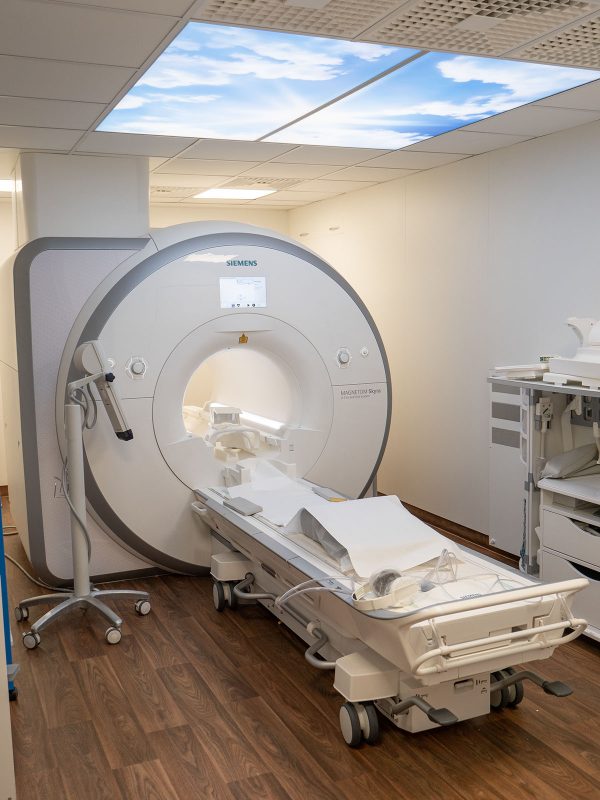
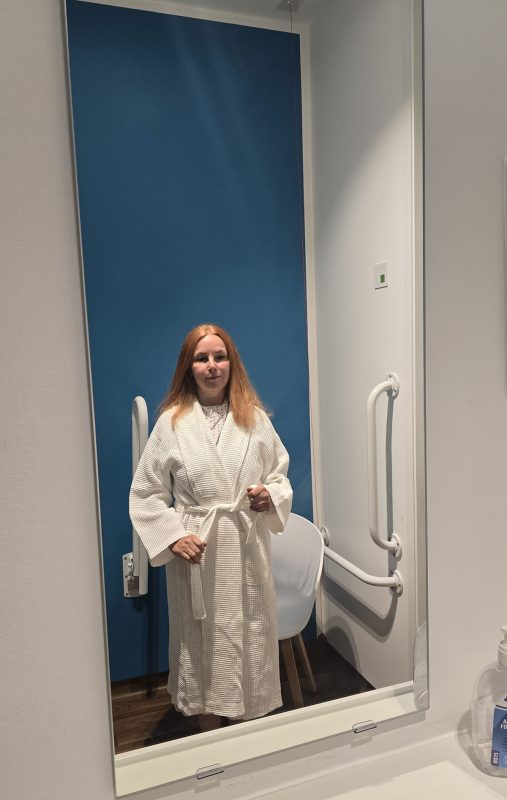
The scan takes between 60 and 90 minutes. You’ll lie on a padded table that slides into the MRI scanner – no radiation, no injections, no contrast dye. The machine makes loud sounds throughout, but you’re given ear protection and can communicate with the technician at any point. The process is entirely painless.
You are advised to stop eating 4 hours beforehand, although you can drink water. This is so that the machine can get a clear view of your abdomen. It’s also important to wear comfortable clothing without metal zips or underwire, and to let the team know in advance about any implants or devices.
Crucially, you’ll need to remove all metal jewellery before entering the scanner – rings, earrings, necklaces and so on. If you’re anything like us and find rings difficult to get off, a little liquid soap works wonders and should do the trick.
If you have claustrophobia, it’s worth raising this at booking as they can discuss options with you. For those who need to frequently use the bathroom, they can pause between certain segments of the scan.
You can also bring someone with you to the clinic – they won’t be in the scanning room, but they can wait nearby.
Step 4: Receive Your Results
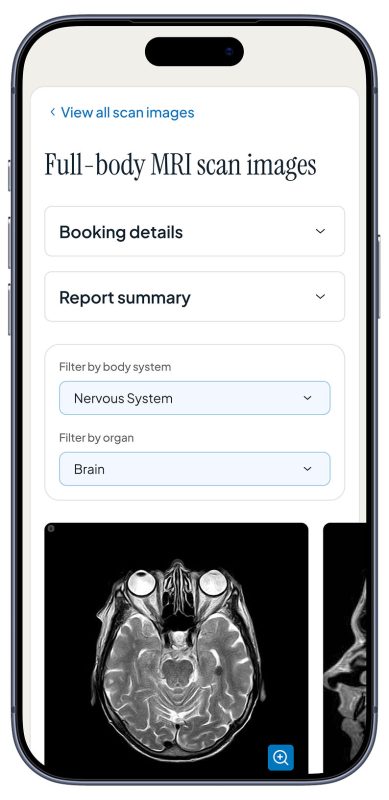
Your consultant radiologist report is delivered within three working days via the CoreVitals app – a secure platform where your results, findings, and scan images are stored and accessible any time.

The Results – Delivered in the App
One of the things I found most impressive is how quickly the results come through. CoreVitals aim to deliver your consultant radiologist report within three working days, which is a significant improvement on the weeks-long waits typical elsewhere.
Everything is stored securely in the CoreVitals app, where findings are broken down by body system and explained in plain English with colour-coded status indicators. In particular, my scan flagged:
Abdomen and Pelvis
A small volume of pelvic free fluid was identified, categorised as an incidental finding to assess. The report noted this is a nonspecific finding that can be normal in postmenopausal women, though more common premenopausal. It was recommended for further follow-up.
Liver
The inferior margin of the liver was noted to extend to or just below the lower pole of the right kidney. With no gross liver pathology detected and the left lobe not enlarged, the radiologist concluded this most likely represents a Riedel lobe – an anatomical variant rather than a clinical concern – and was categorised as seen, not clinically significant.
The GP Consultation
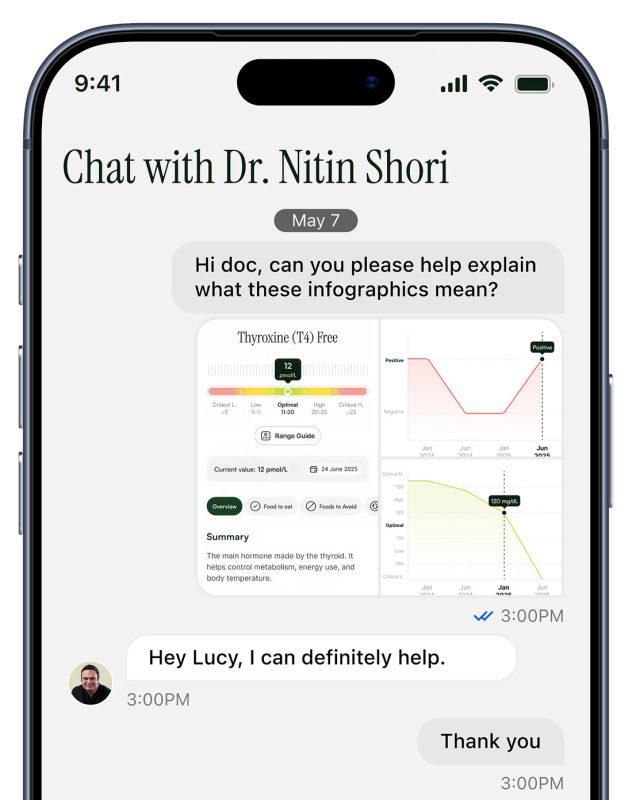
Included in the price is a GP video consultation to discuss your results – mine was conducted by phone (the video option wasn’t working on their end on the day). You can also send questions directly through the app ahead of your call, which is genuinely useful if you want to think through your findings beforehand.
The doctor walked me through every finding clearly and helpfully. Based on my results, they provided a detailed set of dietary and supplement recommendations (more on those below), and also issued a referral to my own GP for the pelvic fluid finding, which was reassuring.
One practical tip: CoreVitals do forward your results to your own GP, but this can take up to three weeks. If you’d like your results reviewed sooner, we’d suggest downloading the report from the app and sharing it directly with your GP yourself.
Personalised Health Recommendations
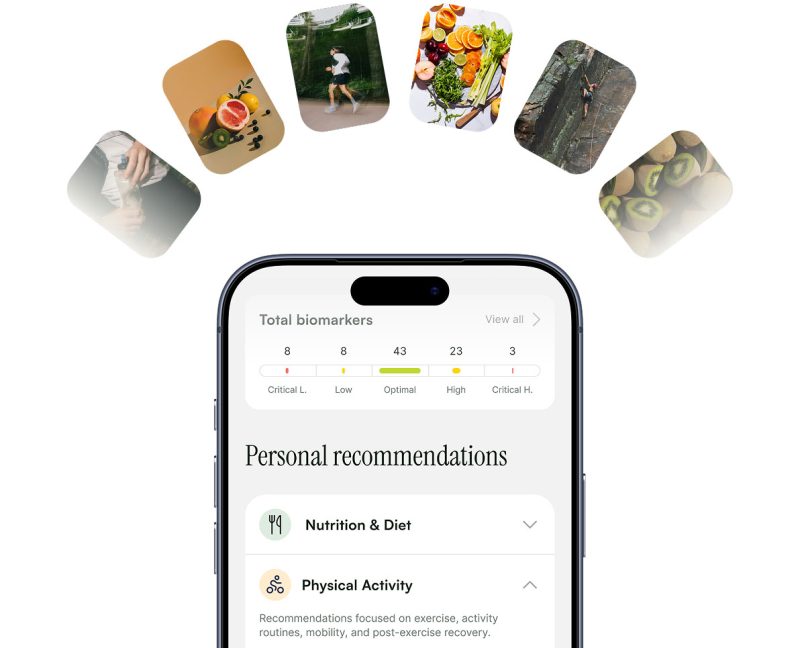
Beyond the scan findings, the GP consultation included tailored dietary and supplement advice – something I wasn’t expecting and found genuinely valuable.
To support cholesterol reduction, I was given the following dietary recommendations:
- Oats as a daily staple
- Shiitake mushrooms
- Replacing normal rice with fermented red rice, and incorporating more fermented foods generally
- A diet rich in avocados and olives
- Omega-3 rich oily fish: sardines, mackerel and anchovies
- Chia seeds and flaxseeds
- Continue with the psyllium husk supplement that I was already taking
On the supplement side, the GP recommended berberine, chromium, CoQ10, and an omega-3 supplement with sufficient EPA/DHA (checking it’s mercury-free). They noted that 700-800mg of omega-3 can also help with joint health and dry skin, beyond its cardiovascular benefits.
I was also pointed towards the British Dietetic Association website – specifically the food facts section – as a reliable resource for evidence-based nutritional guidance.
It’s the kind of specific, actionable advice that’s hard to get from a standard GP appointment, and it gave me a real roadmap rather than just a set of results to sit with.
How Much Does It Cost?
The full body MRI scan is priced at £1,600, which is considerably less than the £2,500+ typically charged by other providers. The price covers everything: safety screening, a GP referral, the 60-90 minute scan, a consultant radiologist report, post-scan GP consultation, and secure lifetime access to your results and images in the app.
There’s also the option to spread the cost over three interest-free instalments via Klarna.
CoreVitals Also Offers Blood Biomarker Testing
Alongside the full body MRI scan, CoreVitals offers a separate blood biomarker testing service which I haven’t personally tried yet.
The service analyses over 100 biomarkers across 11 health systems, including heart health, hormones, metabolism, liver and kidney function, nutritional status, immune health, and cancer markers. It’s designed to give you a detailed picture of what’s happening at a cellular level – the kind of insight that goes well beyond a standard NHS blood test.
What makes it particularly compelling is the package around the results. You get one-to-one consultations with both a doctor and a nutritionist, personalised recommendations, a suggested supplement stack, and year-round tracking through the CoreVitals app. You can even import previous blood test results for historical comparison.
Some of the standout panels include cardiometabolic health – covering cholesterol markers, blood glucose, and inflammation – which can reportedly identify cardiovascular risk up to 10 to 15 years before symptoms appear. The hormonal panel covers thyroid function, sex hormones, and cortisol, while the nutritional panel checks for deficiencies in vitamin D, B12, folate, ferritin, iron, and magnesium.
Is the Full Body MRI Scan Worth It?
I think so – and I’d genuinely recommend it to anyone who values proactive health management. The peace of mind alone has real value, particularly for those with a family history of certain conditions or anyone who simply wants a clear picture of what’s happening inside their body before symptoms ever arise.
The CoreVitals experience felt thorough, well-organised and – importantly for anyone who finds medical appointments daunting – surprisingly calm. The app is easy to navigate, the results are presented accessibly, and the GP follow-up gives the whole process clinical weight.
A full body MRI scan through CoreVitals won’t replace your regular NHS care, but as a complement to it – particularly while NHS waiting lists remain lengthy – it offers exceptional value and genuine insight.
Find out more and book your scan at corevitals.me.
This is an honest review based on my personal experience.
Read next:
