
Thermal spas have been a popular destination for relaxation and rejuvenation for centuries. Known for their natural geothermal waters, these spas offer a unique experience that combines the healing properties of mineral-rich water with a tranquil environment. Visitors flock to these therapeutic retreats in search of relief from various ailments or simply to unwind and enjoy the serenity.
The healing benefits of thermal spas are attributed to the high mineral content and temperature of the hot spring water, which can vary from lukewarm to very hot. These waters are believed to aid in alleviating muscle and joint pain, boosting circulation, and promoting overall health and well-being. I’ve found relief from nerve pain after soaking in thermal spas on my travels in Budapest, Japan and Taiwan.
Not all thermal water is the same, and the minerals make a real difference to how a soak feels. Sulphur springs, such as Saturnia in Tuscany and Banjar in Bali, have a distinctive eggy smell and are traditionally used for skin and joint complaints. Silica gives Iceland’s Blue Lagoon its milky blue colour and silky feel, while calcium-rich water built Pamukkale’s white terraces in Turkey.
Then there are radon spas, such as Bad Gastein in Austria and Jáchymov in the Czech Republic. There, low levels of a naturally occurring radioactive gas are used in supervised treatments for arthritis and chronic pain. The claimed benefits vary with each spring’s mineral profile, and the evidence for many of them is limited, so treat them as a bonus rather than a cure.
Additionally, many spas incorporate additional wellness treatments, such as massages, mud baths, and aromatherapy, enhancing the overall experience and benefits for visitors. Located across the globe, thermal spas can be found in diverse settings, from secluded natural landscapes to luxurious city resorts.
What’s New in the Thermal Spa World
Iceland’s Golden Circle gained a new place to soak in October 2025, when Laugarás Lagoon opened on the banks of the Hvítá River. Its two levels of geothermal pools, kept at 37-40°C, are linked by a 6.6-metre waterfall. There’s also a cold plunge, two saunas and Ylja, a seasonal restaurant run by chef Gísli Matt.
Asia’s hot spring scene is expanding beyond Japan too. Hilton Quang Hanh Onsen Resort opened in northern Vietnam in February 2026, about 30 minutes from Ha Long, and every villa and room has its own private onsen. In Taiwan, the InterContinental New Taipei Hot Spring opened on the Jinshan coast in November 2025, with a hot spring tub in all 211 rooms.
Many of the classics have been upgraded as well, from new saunas at Therme Erding and AQUA DOME to a new forest spa garden at Galgorm. If you’re planning a trip, check what has opened recently in your chosen region. Some of the most memorable soaks are at places that didn’t exist a couple of years ago.
History of Thermal Spas
Roman Times
The history of thermal spas can be traced back to ancient Rome, where they played a significant role in society and culture. Romans highly valued the healing properties of thermal waters, and they constructed numerous bathhouses throughout their vast empire.
The most famous ancient Roman spa is the Baths of Caracalla, built in the early 3rd century AD. It was a marvel of engineering, with complex water supply systems and sophisticated heating mechanisms. Roman baths also served as places for socializing and conducting business.

Turkish Baths
The tradition of thermal spas continued into the medieval period, most notably with the development of Turkish Baths. These were inspired by the Roman tradition but adapted to suit the Islamic culture in which cleanliness and ritual purification were highly prioritized.
The architectural design of Turkish baths was focused on the provision of warmth, humidity, and a series of bathing chambers. Even today, there is a real spa culture in Turkey, with some incredible hammams open to the public. I’ve been fortunate to experience Turkish baths in Bodrum and Istanbul, both in impressive historic settings.
- Cold room: Bathers entered the bathhouse through this chamber, where they left their clothing and began the process of relaxation.
- Tepid room: This was the transitional space where bathers acclimated to the rising heat and humidity while receiving a gentle massage.
- Hot room: Here, bathers experienced the most intense heat and steam, and received an invigorating scrub to exfoliate dead skin cells.
Health Benefits of Thermal Spas
Mineral-Rich Water
Thermal spas are well-known for their mineral-rich water, which can offer various health benefits. These waters are typically high in minerals like calcium, sodium, magnesium, and sulfur.
Soaking in mineral-rich water can help promote skin health, detoxify the body, and improve various skin conditions such as eczema and psoriasis. The presence of these minerals in the water also makes it an excellent natural way to alleviate certain respiratory problems, including allergies and asthma.

Blood Circulation
One of the main health benefits of visiting a thermal spa is its ability to improve blood circulation. The warm water in a hydrotherapy pool helps the blood vessels dilate, increasing blood flow throughout the body. This increased circulation can lead to:
- Reduced inflammation: Improved blood flow helps to decrease inflammation, which can help with pain and stiffness caused by various medical conditions.
- Improved oxygen delivery: Better circulation means increased oxygen delivery to the cells, which supports the body’s natural healing process.
- Relaxation: The increased circulation also aids in the relaxation of muscles, reducing stress levels and promoting a greater sense of overall well-being.
Joint Pain
Thermal spas can be particularly beneficial for those suffering from joint pain. The warm water in a hydrotherapy pool supports the body’s joints, reducing the pressure and strain on them.
This can provide immense relief for those with arthritis, fibromyalgia, or other joint-related conditions. Additionally, thermal spas often incorporate water exercise programs that provide low-impact exercises.
These exercises help to increase flexibility and muscle strength without putting excessive pressure on joints. Some benefits to joint health at thermal spas include:
- Decreased pain and stiffness: The warm water and buoyancy help to alleviate pain and stiffness by reducing the weight on joints.
- Improved range of motion: The gentle exercises often performed in a hydrotherapy pool can gradually improve joint flexibility and overall mobility.
- Enhanced muscle strength: Water resistance exercises can help strengthen the muscles around the joints, increasing stability and decreasing the risk of injury.
Who Should Avoid Thermal Spas?
Hot mineral water isn’t for everyone. If you’re pregnant, have a heart condition, or have high or low blood pressure, speak to your doctor first. The heat widens your blood vessels and can leave you dizzy or faint.
Stay out of the water if you have open cuts or wounds, a skin infection or a fever, or if you’ve recently had surgery. Avoid alcohol before and during a soak, and take extra care with radon treatments, which are generally not advised during pregnancy.
Children are more sensitive to heat and minerals than adults. In Budapest, the Széchenyi and Rudas baths no longer admit anyone under 14, in line with Hungarian rules on medicinal water.

Types of Hot Springs and Thermal Spas
Natural Thermal Pools and Springs
Thermal springs are natural water sources that are heated by the Earth’s geothermal energy. They typically contain minerals, making them popular destinations for relaxation and therapeutic treatments.
These springs can be found in various forms such as hot tubs, natural hot springs, steam rooms, and thermal pools. Some locations may offer both indoor and outdoor pools, allowing visitors to enjoy the benefits of thermal springs in diverse environments.

Geothermal Springs
Geothermal springs are a type of thermal spring characterized by their heat source, which is the Earth’s geothermal energy. These springs are formed when groundwater is heated by the Earth’s magma and subsequently rises to the surface.
Geothermal springs often contain minerals and offer numerous health benefits, making them popular destinations for wellness retreats. Examples of geothermal springs can include outdoor pools and hot baths that draw their water directly from underground sources.

Hydrothermal Springs
Hydrothermal springs are hot water sources created by the interaction between hot rocks and groundwater. Like other thermal springs, hydrothermal springs can contain minerals, and their temperatures can range from warm to boiling hot.
These springs are often used for relaxation and therapeutic purposes, providing benefits through their mineral-rich composition and heat. Commonly seen in the form of steam rooms, hot baths, and thermal pools, hydrothermal springs offer a unique experience for those seeking a natural rejuvenation.
Most Famous Thermal Spas and Hot Springs
We’ve grouped these thermal spas by their country’s alphabetical order. It’s hard to choose one as being better than the others!
Most of these incredible thermal spas are natural, although we have included a manmade one located next to water cascades, as it’s too good to leave out!
1. Peninsula Hot Springs, Fingal, Australia
Set amongst the picturesque Mornington Peninsula in Victoria, Australia, Peninsula Hot Springs offers a variety of geothermal pools and wellness experiences. The award-winning spa resort boasts natural thermal pools, an ice cave, and a multitude of relaxation options, providing a serene sanctuary for visitors.
It was named Best Luxury Hot Springs in the World at the World Luxury Spa Awards, and now offers more than 70 bathing and wellness experiences.

2. AQUA DOME – Tirol Therme Längenfeld, Austria
Located in the picturesque Ötztal Valley, AQUA DOME – Tirol Therme Längenfeld offers stunning alpine scenery alongside modern spa facilities. The outdoor thermal pools boast breathtaking views of the surrounding mountains, while the indoor area features a variety of water-based activities and relaxation options.
In autumn 2025 it reopened its sauna area after a renovation and expansion, added new premium relaxation rooms and launched a “thermal longevity” concept. New “Freiraum” junior suites followed in 2026.

3. Thermes de Spa, Spa, Belgium
Situated in the historic town of Spa in Belgium’s Wallonia region, Thermes de Spa combines historic charm and contemporary comfort. With over a century of tradition, guests can unwind in the mineral-rich spring water and enjoy various spa treatments for a truly revitalizing experience.

4. Baldi Hot Springs, Costa Rica
Located near the Arenal Volcano in Costa Rica, Baldi Hot Springs Hotel & Spa offers 25 unique thermal pools, each with varying temperatures to cater to individual preferences. Surrounded by lush Costa Rican rainforest, visitors can unwind in the soothing waters while taking in the breathtaking natural scenery.

5. Friedrichsbad Baden-Baden, Germany
Friedrichsbad Baden-Baden is an iconic thermal spa, built in 1877 and inspired by ancient Roman architecture. The 17-step bathing ritual incorporates a blend of Irish and Roman bathing traditions, featuring thermal water, steam baths, and scrub massages, providing a unique and refreshing experience.
The state is running a tender to lease, operate and modernise Friedrichsbad and Caracalla Therme together, which includes repairs to Friedrichsbad. It is still open, but it’s worth checking before booking a trip there.

6. Therme Erding, Bavaria, Germany
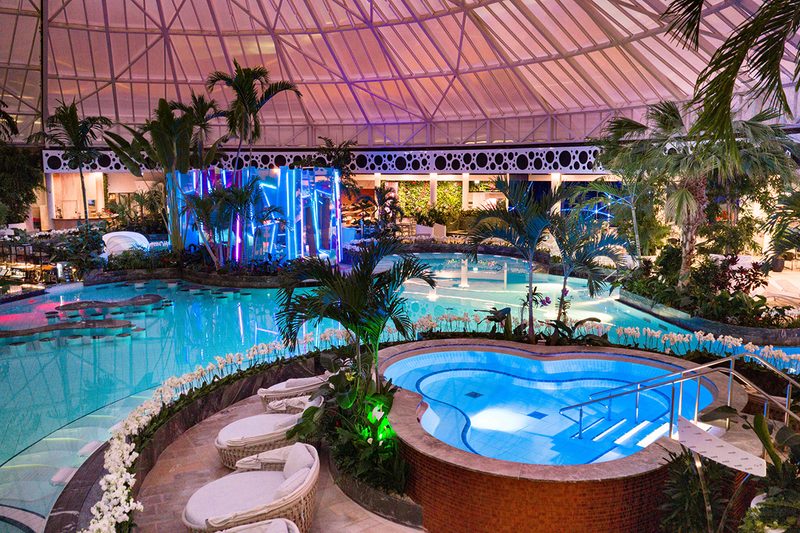
Therme Erding, a short drive from Munich Airport, is officially the world’s largest thermal spa. It covers around 185,000 square metres, with 40 pools, 35 saunas and steam rooms and 28 waterslides. In 2024 it welcomed a record 1.9 million guests.
The complex is divided into zones, so you can pick your pace. Galaxy is the family area, with slides and a wave pool. The quieter Vital Oasis is where the thermal bathing happens, including 40°C sulphur pools fed by the Ardeo spring, along with calcium, selenium-iodine and Dead Sea-style mineral baths.
The Vital & Sauna area is textile-free, in keeping with German sauna tradition. A recent refresh under new owner Therme Group added the colour-changing Re-flexion sauna beneath the dome and Polaris, which is billed as the world’s largest cold plunge pool. To stay on site, book Hotel Victory, a ship-themed hotel overlooking the wave pool.
7. Rudas Thermal Baths, Budapest, Hungary
Dating back to the 16th century, Rudas Thermal Baths in Budapest is an oasis of calm within the bustling city. The historic Turkish baths feature a stunning octagonal pool, while the recently renovated wellness area offers a range of modern treatments to its visitors.
It’s worth noting that Rudas Thermal Baths does not admit under-14s.

8. Széchenyi Thermal Baths, Budapest, Hungary
As the largest medicinal baths in Europe, Széchenyi Thermal Baths boast 18 pools filled with naturally warm mineral waters. Nestled in the heart of Budapest, the neo-Baroque architecture and lush gardens provide a picturesque setting for relaxation and rejuvenation.
I’ve been to these baths twice, and had quite a vigorous massage here once! The massage rooms are no-frills but the complex itself is impressive with its range of outdoor and indoor pools.
Since August 2025, Széchenyi does not admit children under 14 years old. A full overhaul of Széchenyi’s outdoor swimming pool began in March 2025, and the baths stayed open throughout.
With Gellért closed from October 2025 until 2028, booking ahead and arriving early matter more than ever.

9. Blue Lagoon, Iceland
The Blue Lagoon in Iceland is a world-famous geothermal spa renowned for its mineral-rich waters and otherworldly landscape. The bright blue waters, heated by geothermal energy, are known for their healing properties and make these outdoor hot springs a popular destination for both tourists and locals alike.
And if you’re lucky, you might even see the Northern Lights! I recommend staying at The Retreat at Blue Lagoon Iceland to get in before the crowds.
You must book in advance, and the access route has changed: visitors now use Road 44 rather than the old road through Grindavík. It can also close at short notice during eruptions.

10. Banjar Hot Springs, Bali, Indonesia
Nestled within a lush tropical landscape, Banjar Hot Springs in Bali presents an idyllic escape from the hustle of everyday life. The volcanic mineral waters, heated by nearby Mount Banjar, flow through beautifully carved stone spouts, providing guests with the ultimate relaxation experience.
Banjar Hot Springs is in North Bali and gets far fewer visitors than the southern beaches. Entry has risen to IDR 45,000 for foreign visitors.

11. Montecatini Terme, Tuscany, Italy
Montecatini Terme is a historic spa town in Tuscany, Italy, known for its elegant thermal establishments. Visitors can experience the curative powers of the thermal waters while soaking in the opulent surroundings and indulging in various wellness treatments.
Montecatini Terme is one of the best thermal spas in Europe. There are several major bath complexes, including the iconic Tettuccio Spa with its domed roof. The architectural style adds old-world elegance.
The historic baths are still open to the public despite ongoing financial and ownership restructuring. The region has committed to acquiring Tettuccio, Excelsior and Regina, while a private investor has renewed its offer for the other buildings.

12. Saturnia Hot Springs, Tuscany, Italy
Located in the beautiful Maremma region of Tuscany, the Terme di Saturnia features cascading thermal waterfalls and steaming pools. The mineral-rich waters, renowned for their health benefits, offer visitors an unforgettable thermal spa experience in a unique natural setting.
Also known as Cascate del Mulino, this natural hot spring is free and can therefore get extremely busy. For a more relaxed ambiance, book yourself into one of the thermal spa hotels in the area such as Terme di Saturnia Natural Spa & Golf Resort. Under a €15 million plan for 2026-27, it is adding four junior suites with private thermal pools, a new Roman bath, a new sauna and a new spa reception.

13. Umi Jigoku, Beppu, Japan
Located in the city of Beppu, in the prefecture of Oita on the island of Kyushu, lies a fascinating natural wonder known as the Umi Jigoku, or “Sea Hell”. This unique hot spring is part of a larger collection of thermal ponds known as the “Eight Hells of Beppu” or “Jigoku meguri”.
With its vibrant blue-green waters, I found Umi Jigoku a breathtaking sight to behold. It measures up to 200 meters in circumference and maintained at a constant temperature around 98 degrees Celsius – far too hot for bathing. This is a viewing attraction showcasing the raw power of Beppu’s geothermal activity, though the city itself offers plenty of actual soaking opportunities in its many public and private onsens.
Having visited Beppu myself, I recommend Hyotan Onsen at 159-2 Kannawa, Beppu. It has outdoor and indoor hot baths with some private rooms, plus a restaurant.

14. Therme Bucuresti, Romania
Therme Bucharest, nestled in the bustling city of Bucharest, Romania, is a stunning complex. The thermal pools, which are kept warm with thermal water sourced from 3,000 meters depth beneath the surface of the Earth, offer visitors a unique and rejuvenating bath experience.
Therme Bucharest is equipped with 10 pools of varying sizes and temperatures, making it the perfect destination for individuals, couples and even families.

15. Beitou Hot Springs, Taipei, Taiwan
Beitou sits at the foot of Yangmingshan National Park, just a metro ride from central Taipei, and has been a hot spring retreat since Japanese bathhouses were built here in the early 1900s. It’s also one of the few places in the world with three kinds of spring water close together: milky white sulphur, highly acidic green sulphur and iron-rich springs.
Start at Thermal Valley, a steaming jade-green lake that feeds the area’s springs. The water is far too hot to touch, so you can only look. Then walk down to the Beitou Hot Spring Museum, housed in a 1913 bathhouse that was once the largest in East Asia. Thermal Valley and the museum are closed on Mondays.
We spent a day at Spring City Resort, perched above the valley close to the source of Beitou’s milky white sulphur water. We moved between outdoor pools at different temperatures, set in a peaceful hillside garden, then enjoyed a Japanese lunch at the resort’s restaurant. Day visitors are welcome to book, so you don’t need to stay overnight to enjoy the pools.
If you want to spend more, Villa 32 is Beitou’s most exclusive address, with only five suites and private hot spring rooms for over-16s. Grand View Resort looks out over the Tamsui River, and some of its suites have a stone hot spring tub on the balcony.
16. Pamukkale and Cleopatra’s Pool, Denizli, Turkey
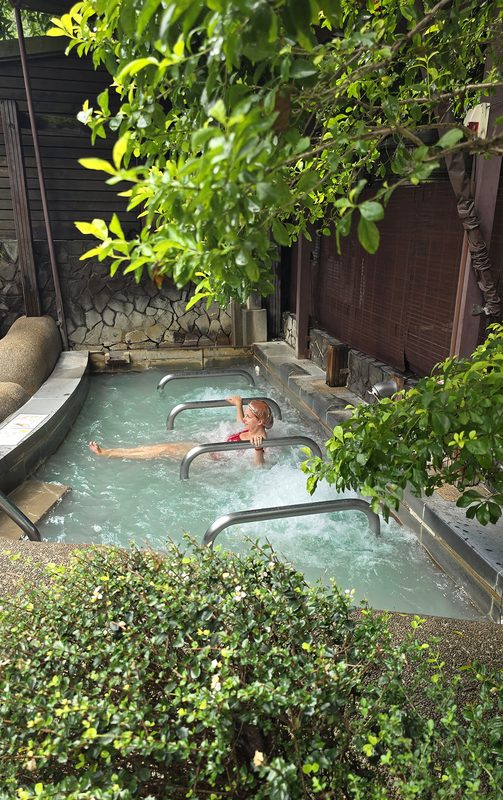
Pamukkale, which means “cotton castle” in Turkish, is one of the most photographed thermal landscapes on Earth. Calcium-rich spring water has flowed down this hillside for thousands of years. It has left gleaming white travertine terraces filled with shallow, milky-blue pools.
Above the terraces are the ruins of Hierapolis, an ancient Greco-Roman spa city, and the two together form a UNESCO World Heritage Site. You walk the terraces barefoot to protect the fragile surface. One ticket, currently around €30, covers the travertines, the ruins and the museum.
For a proper soak, go to Cleopatra’s Antique Pool, where you swim among toppled marble columns in warm spring water. Entry costs extra, and the pool closed for maintenance over winter 2025/26, so check it’s open before you go. Arrive early or late in the day to avoid the coach tours.

17. Galgorm, Ballymena, United Kingdom
Galgorm Resort and Spa provides a luxurious escape amidst tranquil gardens and woodlands. Although it is not a natural thermal spa, this Northern Ireland thermal village includes indoor and outdoor elements, such as steam rooms, hot tubs, and hydrotherapy pools, blending seamlessly with the surrounding natural environment.
The new Forest Spa Garden adds four relaxation cabanas, three private hot tubs, a sauna and forest walkways. Its first phase opened on 18 December 2025, and more phases are planned each year until 2029.
I particularly liked the Hobbit style wooden saunas dotted around the grounds. Galgorm can get quite busy as they do allow day guests. That’s why I’d recommend staying overnight to get in as early as you can!
We stayed in a traditional shepherd’s hut in their grounds – cute but with no real storage so best for an overnight stay only.

18. Thermae Bath Spa, Bath, United Kingdom
Thermae Bath Spa is a luxurious thermal spa in the center of Bath, where visitors can experience the same waters that have drawn people for over 2,000 years. The spa features a rooftop pool with stunning views of the city, as well as various traditional steam rooms and treatments.
It was named Best City Spa at the Good Spa Guide Awards 2025, and a two-hour weekday session costs £42.50. I’ve visited Thermae Bath Spa a couple of times. I’d advise starting with the top floor pool if it’s not raining as it can get quite busy, then working your way down through the other floors.

19. Buckstaff Bathhouse, United States
As a part of Hot Springs National Park in Arkansas, Buckstaff Bathhouse has been providing traditional thermal water treatments since 1912.
Guests can relax in the historic building and enjoy a range of soaks, scrubs, and massages to experience the recuperative powers of the mineral-rich waters. A new 10-year concession has been awarded to Historic Baths, LLC, bringing longer opening hours and advance reservations. The handover begins on 1 January 2027.

20. Chena Hot Springs Resort, United States
Located in the Alaskan wilderness, Chena Hot Springs Resort draws visitors with its unique combination of geothermal hot springs and breathtaking scenery. The resort offers therapeutic soaking pools, providing a rejuvenating experience in a truly remote and serene setting.
Only over-18s can use the natural hot springs lake.

21. Riverbend Hot Springs, United States
Overlooking the Rio Grande in New Mexico, Riverbend Hot Springs blends calming mineral waters with stunning views of the surrounding mountains and desert. Located in the unusually named city of Truth or Consequences (renamed in 1950 after a radio show contest), Riverbend offers some of the best hot springs in the United States.
The spa’s rustic yet elegant atmosphere ensures a relaxing and soothing retreat. There are bookable private pools as well as communal pools, and some unique hotel rooms.

22. Yellowstone Hot Springs, Corwin Springs, Montana, United States
Bear in mind that you cannot bathe in the actual natural hot springs of Yellowstone National Park. It is unsafe for visitors, and could cause damage to the environment.
Instead, head eight miles north of the park’s Gardiner entrance to Yellowstone Hot Springs, which was formerly Corwin Hot Springs. It sits on the bank of the Yellowstone River, facing the mountains, and draws on the same spring that has fed bathhouses here since the early 1900s.
The unchlorinated, flow-through pools include a large main pool at around 39°C, a hotter plunge pool and a cold plunge, plus a Kneipp walk where you alternate between hot and cold water. You don’t need to book a day pass, but it’s closed on Mondays and Tuesdays.
If you’d like somewhere more historic, Chico Hot Springs Resort in Pray, around 30 miles north of Gardiner, has its own hotel and outdoor pools.
What to Pack for a Thermal Spa Visit
- Flip-flops or pool shoes: Wet tiles and natural rock are slippery, and some spas require footwear around the pools.
- An old or dark swimsuit: Sulphur and mud can leave a lingering smell, and minerals can fade bright fabrics. Choose one without metal rings or clasps, as these can tarnish.
- No silver jewellery: Sulphur water can turn silver black, so leave it in your room.
- Hair tie and conditioner: Silica-rich water, like the Blue Lagoon’s, can leave long hair stiff and dry, so coat it in conditioner and tie it up.
- A swimming cap: Some European baths require one in their lap pools.
- A refillable water bottle: Hot water dehydrates you faster than you’d expect.
- Your own robe and towel: Rental fees add up quickly. At German and Austrian textile-free saunas, you’ll also need a large towel to sit on.
- Coins or a card for lockers, and a waterproof phone pouch: These are useful at outdoor springs where you’ll want photos.
Frequently Asked Questions
Is a thermal spa the same as a natural spring?
A thermal spa and a natural spring are not exactly the same, although they share similarities. Both involve water heated by the Earth’s geothermal energy.
A natural spring is a place where heated water flows naturally out of the ground, such as the travertine pools of Pamukkale in Turkey. A thermal spa uses that naturally heated water to offer bathing facilities, treatments and wellness experiences.
How long can you spend in a thermal spa?
The recommended duration in a thermal spa can vary depending on individual preferences and comfort levels. Generally, it is advised to spend around 15 to 20 minutes per session in a thermal pool, followed by a rest period to allow the body to cool down. Overexposure to hot water can cause dizziness, dehydration, and heat exhaustion, so it is important to monitor your own health and listen to your body’s signals.
Are thermal spas safe?
Thermal spas are safe for most individuals. However, pregnant women, people with heart conditions, and individuals with skin or respiratory issues should consult their doctor before visiting a thermal spa to ensure their safety.
What is the largest thermal spa in the world?
The largest thermal spa in the world is Therme Erding, near Munich in Germany. It covers around 185,000 square metres and has 40 pools, 35 saunas and steam rooms, and 28 waterslides. Its themed zones range from a family slide park to a Roman-style thermal villa and a textile-free sauna world.
What is the oldest thermal spa in the world?
The oldest known thermal spa in the world is in Belgium. A natural spring was discovered in 1326 in the Belgian town of Spa. This is where the modern word “spa” comes from.
Final Thoughts on the Best Natural Hot Springs Spas
The world is home to an incredible array of thermal spas, from the iconic hot spring pools of Iceland and Japan to the rejuvenating mud baths of Italy and the therapeutic mineral waters of Hungary.
No matter where your travels take you, there is a restorative thermal spa experience waiting to be discovered.
The world’s finest thermal spa destinations provide a serene oasis to disconnect, recharge, and soak in the hot springs.
Read Next:
